Decoradhouse Garden Tips By Decoratoradvice: The Complete Zone-by-Zone Guide
September 11, 2026 · by toped agency
Most gardening advice online tells you to “pick plants you love” and “add some lighting.” That advice fails the moment you actually step outside, because your climate zone, your soil, and your budget decide what works — not your Pinterest board. This guide on decoradhouse garden tips by decoratoradvice skips the vague talk and gives you specific, usable steps: what to test, what to plant, what to spend, and when to do it based on where you live in the United States.
If you want a garden that survives past week three, keep reading.
Why Most Garden Advice Fails Before You Even Start
The biggest mistake homeowners make is buying plants first and planning second. A plant that looks perfect at the nursery can die in your yard within a month if it doesn’t match your sunlight, soil, or hardiness zone. That’s the gap this set of decoradhouse garden tips by decoratoradvice is built to close — planning before purchasing, and matching decisions to your actual conditions instead of general trends.
The Real Order of Operations
Before you touch a single plant, pot, or light fixture, work through this order:
- Map your sunlight (morning sun vs. afternoon sun changes everything)
- Test your soil (pH and drainage, not just “does it look like dirt”)
- Identify your USDA Hardiness Zone
- Set a real budget with tiers, not a single number
- Choose a layout before choosing plants
- Select plants that match steps 1–4
- Plan irrigation and lighting last
Skipping steps 1 through 4 is why so many backyard projects turn into wasted money by August.
Step 1: Map Your Sunlight Properly
Don’t guess. Walk your yard at three points in the day — morning, midday, and late afternoon — and note which areas get direct sun versus shade. Write it down or sketch it. This single step prevents more plant deaths than any other mistake.
Sunlight categories to identify:
- Full sun — 6+ hours of direct sunlight daily
- Partial sun/shade — 3–6 hours of direct sunlight
- Full shade — less than 3 hours of direct sunlight
- Reflected heat zones — areas near concrete, brick walls, or south-facing fences that run hotter than the rest of the yard
This mapping step is one of the most overlooked parts of any garden plan, and it’s a core part of doing decoradhouse garden tips by decoratoradvice correctly instead of guessing. decoration tips decoradhouse from decoratoradvice
Step 2: Test Your Soil Before Buying Anything
A $12 soil test kit or a $15 lab test through your local county extension office will tell you two critical things: pH level and drainage quality. Skipping this step is the second most common reason plants fail.
Simple Drainage Test
- Dig a hole 12 inches deep and 12 inches wide
- Fill it with water and let it drain completely
- Fill it again and time how long it takes to drain
- Under 4 hours = fast-draining (good for drought-tolerant plants)
- 4–8 hours = normal drainage (good for most garden plants)
- Over 8 hours = poor drainage (needs raised beds or soil amendment)
Soil Amendment Quick Reference
| Soil Problem | Fix | Approximate Cost |
|---|---|---|
| Heavy clay | Add compost + coarse sand | $30–$60 per 100 sq ft |
| Sandy, fast-draining | Add compost + peat moss | $25–$50 per 100 sq ft |
| Low pH (acidic) | Add garden lime | $15–$25 per 100 sq ft |
| High pH (alkaline) | Add elemental sulfur | $15–$25 per 100 sq ft |
| Poor drainage overall | Build raised beds | $80–$300 depending on size |
Step 3: Know Your USDA Hardiness Zone
This is the single most skipped step in generic garden content, and it’s the part that separates real decoradhouse garden tips by decoratoradvice from filler advice. Your hardiness zone tells you which plants can survive winter in your area.
Quick regional reference for the continental US:
| Region | Typical Zones | What Grows Reliably |
|---|---|---|
| Northeast | 5–7 | Hostas, hydrangeas, daylilies, spring bulbs |
| Southeast | 7–9 | Camellias, azaleas, crepe myrtle, citrus (zone 9) |
| Midwest | 4–6 | Coneflowers, black-eyed Susan, peonies |
| Southwest | 7–10 | Agave, lavender, desert marigold, succulents |
| Pacific Northwest | 7–9 | Rhododendrons, ferns, Japanese maples |
| Northern Plains/Mountain West | 3–5 | Russian sage, sedum, ornamental grasses |
Find your exact zone through the USDA Plant Hardiness Zone Map before buying anything perennial.
Step 4: Set a Real Budget in Tiers
Vague budgeting is why garden projects stall halfway through. Break your project into tiers instead of one lump number.
Budget Tier Breakdown
Under $150 (Refresh tier)
- Mulch refresh
- 5–8 annual flowers
- One new planter
- Basic hand tools
$150–$500 (Upgrade tier)
- Raised garden bed kit
- Perennial plant mix (8–12 plants)
- Solar path lighting (4–6 fixtures)
- Soil amendment for one bed
$500–$1,500 (Transformation tier)
- Full irrigation drip system
- Hardscaping element (small patio or path)
- Larger tree or shrub additions
- Wired outdoor lighting
Choosing your tier before shopping prevents the classic mistake of buying scattered items with no cohesive plan — a mistake every version of generic decoradhouse garden tips by decoratoradvice content ignores.
Step 5: Plan Your Layout Before Choosing Plants
Layout decisions should be made on paper, not in the nursery aisle.
Layout priorities in order:
- Walkways and movement paths first
- Seating or functional zones second
- Focal points (a tree, a sculpture, a raised bed) third
- Fill-in planting last
A garden that’s planned this way feels intentional instead of cluttered. This is where most backyard projects go wrong — plants get added first, and the layout gets forced around them instead of the other way around.
Step 6: Choose Plants That Match Your Conditions
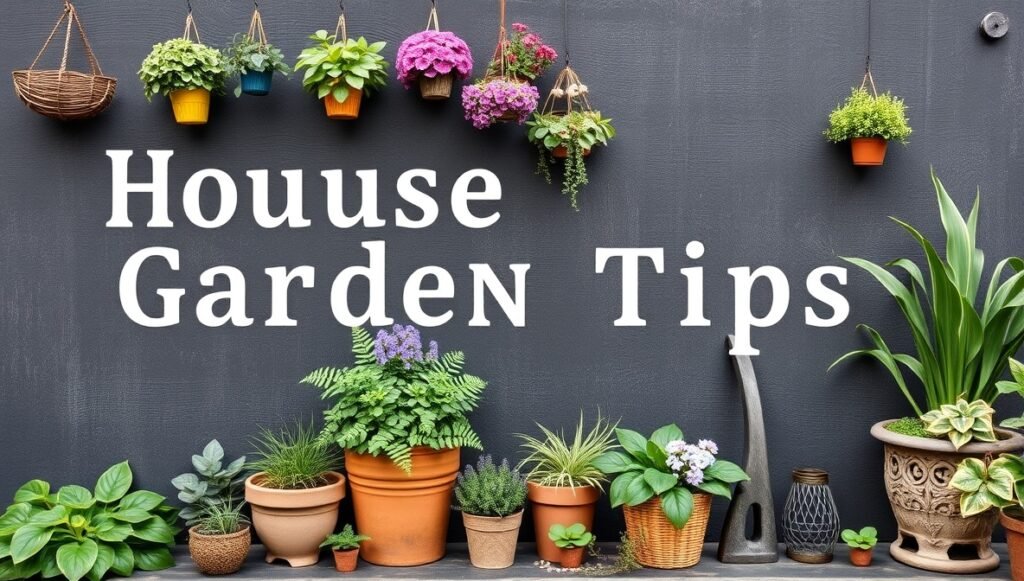
Now, and only now, pick your plants. Match them against your sunlight map, soil results, and hardiness zone from the steps above.
Low-Maintenance Plant Picks by Sunlight
- Full sun: Black-eyed Susan, Russian sage, daylilies, sedum
- Partial shade: Hostas, coral bells, astilbe, ferns
- Full shade: Hostas, lungwort, Japanese forest grass
Container Gardening Notes
- Use pots at least 12 inches deep for most perennials
- Add drainage holes if they don’t already exist
- Use a potting mix, never straight garden soil, in containers
- Water container plants more frequently than in-ground beds — they dry out faster
Step 7: Add Irrigation and Lighting Last
Irrigation Comparison
| Method | Best For | Water Efficiency | Approx. Cost |
|---|---|---|---|
| Drip irrigation | Garden beds, containers | High | $50–$200 (DIY kit) |
| Sprinkler system | Lawns | Low–Medium | $200–$800 |
| Manual watering | Small gardens, containers | Depends on consistency | Free–$30 (hose/watering can) |
| Soaker hose | Row plantings, vegetable beds | Medium–High | $20–$40 |
Lighting Options
- Solar path lights — no wiring, easiest install, moderate brightness
- Low-voltage wired lighting — brighter and more reliable, requires a transformer
- String lights — best for seating areas and ambiance, not functional pathway lighting
Seasonal Maintenance Calendar
Following decoradhouse garden tips by decoratoradvice through the seasons keeps a garden alive year-round instead of thriving for one summer and dying by fall.
| Season | Key Tasks |
|---|---|
| Spring | Soil test, plant summer annuals, divide perennials, mulch beds |
| Summer | Deep watering 2–3x weekly, deadhead flowers, monitor for pests |
| Fall | Plant spring bulbs, cut back perennials, add compost, reduce watering |
| Winter | Protect containers from freeze, plan next year’s layout, order seeds |
Common Mistakes to Avoid
- Buying plants before checking your hardiness zone
- Overwatering instead of checking soil moisture first
- Ignoring drainage until plants start dying
- Skipping a layout plan and placing items randomly
- Choosing full-sun plants for shaded areas because they “looked nice” at the store
- Underestimating ongoing maintenance time when picking high-upkeep plants
Every one of these mistakes is avoidable by following the steps in this guide instead of generic decoradhouse garden tips by decoratoradvice that skip zone data, soil testing, and budgeting altogether.
Building a Garden That Actually Lasts
A garden that survives more than one season comes down to sequence: sunlight mapping, soil testing, zone matching, budgeting, layout, plant selection, then irrigation and lighting. Following this order — rather than buying decor first and hoping it works — is what separates a garden that thrives for years from one that gets replanted every spring.
Applying real decoradhouse garden tips by decoratoradvice means treating your yard like a system with specific inputs, not a decoration project you finish in a weekend. Once the foundation (soil, sun, zone) is right, everything else — plant choice, lighting, layout — becomes far easier to get right the first time.
Frequently Asked Questions
What is the first step in decoradhouse garden tips by decoratoradvice?
The first step is mapping your sunlight and testing your soil before buying any plants, since these two factors determine what will actually survive in your yard.
How do I know my USDA Hardiness Zone?
Search your ZIP code on the official USDA Plant Hardiness Zone Map, which shows your zone based on average winter minimum temperatures.
What’s the cheapest way to start a garden refresh?
A refresh-tier budget under $150 covering mulch, a few annual flowers, and one new planter is enough to noticeably improve a small space.
How often should I water a new garden bed?
New plantings typically need watering every 2–3 days for the first few weeks, then can shift to a normal seasonal schedule once roots establish.
Do I need an irrigation system for a small garden?
Not necessarily — a soaker hose or consistent manual watering works fine for small beds, while drip irrigation is more efficient for larger or multiple garden zones.
What’s the biggest mistake beginners make with garden layout?
Placing plants before planning walkways and functional zones, which forces an awkward layout instead of a natural, usable flow.