KDArchitects Landscape Ideas by Roger Morph: A Practical Guide for US Yards
September 24, 2026 · by toped agency

Search for kdarchitects landscape ideas by roger morph and you will land on pages that repeat the same lines: blend architecture with nature, make the yard functional, use sustainable materials. None of them tell you how deep a patio base should be, which native grass suits Ohio, or what a backyard redesign costs. This guide fills those gaps. It takes the principles that recur across the popular write-ups and turns them into steps, tables, and numbers you can apply to a real lot.
A Note on Attribution Before the Design Advice
Pages about kdarchitects landscape ideas by roger morph disagree on basic facts. One says the firm was founded by Kiran Dhotre. Another says Roger Morph founded it. Others call him a landscape design lead, a renowned architect, or simply a creative mind tied to the concepts. I could not find independent verification, such as a license listing, a named project with an address, or press coverage outside a cluster of similar-looking sites. www . kdarchitects .net
So treat the name as a label for a set of ideas, not as a credential. Everything below rests on standard landscape design practice. If you plan to hire someone, check their license with your state board (most states regulate landscape architects) and ask for addresses of completed projects you can visit or verify.
What These Landscape Ideas Actually Mean

Strip away the marketing language and the ideas reduce to five habits:
- Study the site before choosing any feature
- Divide the yard into outdoor rooms with clear purposes
- Repeat materials from the house in the landscape
- Plant regional natives in groups that share water needs
- Build hardscape on a proper base so it lasts
None of this is exotic. That is the point. Most disappointing yards fail because someone skipped one of these steps, not because they lacked a dramatic feature.
The Five Core Principles, Explained
The five principles behind kdarchitects landscape ideas by roger morph are easy to say and easy to get wrong. Here is what each one requires in practice.
Principle 1: Read the Site First
Designers who work this way spend time on the lot before drawing anything. They note where water goes after rain, where the sun sits at 4 p.m. in July, which neighbor windows look into the yard, and where the ground is soft or compacted. A feature placed against these conditions fights the site forever. A feature placed with them needs little upkeep.
Principle 2: Build Outdoor Rooms
An outdoor room is any area with a single clear purpose: dining, cooking, lounging, playing, growing vegetables, or sitting quietly. The location matters more than the size. A dining table works best within a few steps of the kitchen door, because nobody carries plates across a lawn twice. A reading chair works best where afternoon shade falls.
Principle 3: Carry Materials Across the Threshold
Material continuity means a material used inside or on the house shows up again outside. Brick on the fireplace becomes brick edging in the garden. Cedar cladding becomes a cedar fence or bench. Dark window frames are echoed in a steel planter or pergola. The yard then reads as an extension of the house instead of a separate project.
Principle 4: Group Native Plants by Water Need
Native plants generally handle local rainfall, soil, and temperature swings better than imports, and they support birds and pollinators. The design trick is grouping. Plants that want regular water go near the house or a hose bib. Drought-tolerant plants go at the edges. A single irrigation zone can then serve each group without drowning half of it.
Principle 5: Invest in the Base Under Hardscape
Patios and paths fail from below. A shallow or poorly compacted base shifts, and the surface cracks, sinks, or ponds water. Spending more on excavation, compacted aggregate, and edge restraint is the cheapest way to make a patio last decades.
Site Reading: A Step-by-Step Walkthrough
Site reading is the step most summaries of kdarchitects landscape ideas by roger morph mention and few explain. You can do it yourself in a weekend with a notebook, a phone, and a tape measure.
- Sketch the lot. Measure the property, house footprint, doors, windows, and existing trees. Graph paper at a set scale works fine.
- Track sun. Photograph the yard at 9 a.m., noon, and 4 p.m. Mark full sun (6+ hours), part shade, and full shade.
- Watch water. After a heavy rain, note where puddles form and which direction water runs. Mark downspout outlets.
- Test soil. Dig a hole about a foot deep, fill it with water, and time how fast it drains. Slow drainage points to clay. Send a sample to your county extension office for pH and nutrient results.
- Note wind and views. Mark the direction of prevailing wind and any views worth framing or eyesores worth screening.
- Mark utilities. In the US, call 811 before digging so buried lines are marked.
- Log how you move. Watch the paths you already walk. Put permanent paths where feet already go.
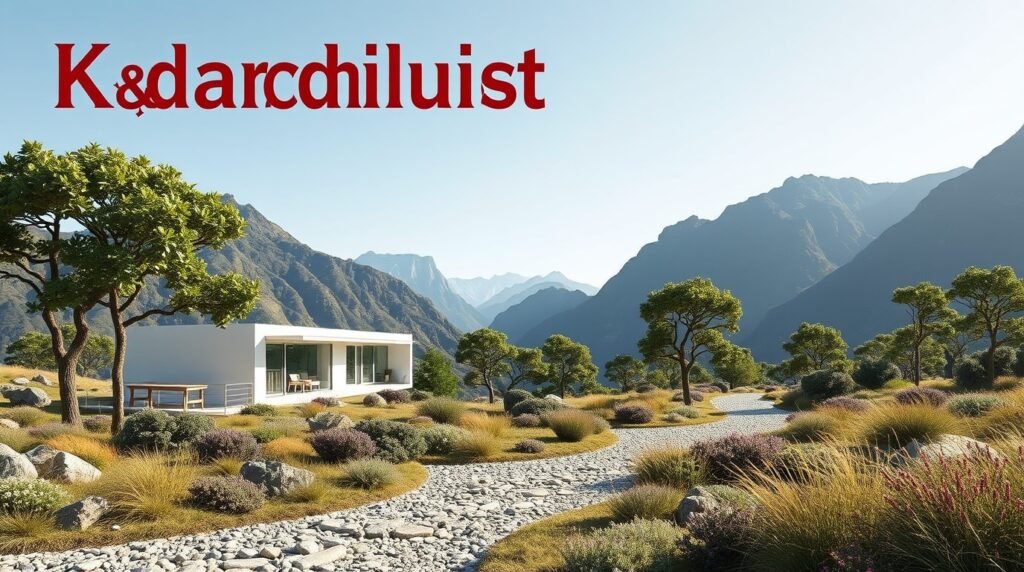
Once these notes exist, feature placement mostly decides itself.
Materials and Hardscape: What to Choose
Material continuity is the most visible part of kdarchitects landscape ideas by roger morph, and it is also where budgets get burned. The table below compares common options. Costs are rough installed ranges per square foot and vary widely by region, site access, and contractor, so use them for early planning and confirm with local quotes.
| Material | Best For | Main Risk | Rough Installed Cost per Sq Ft |
|---|---|---|---|
| Compacted gravel with edging | Paths, casual patios, tight budgets | Migrates without solid edging; hard to roll a wheelchair over | $5–$12 |
| Poured concrete | Clean modern patios, driveways | Cracks in freeze-thaw climates without control joints | $8–$18 |
| Permeable pavers | Rainy regions, stormwater limits | Needs an open-graded base; joints can clog with fines | $15–$30 |
| Natural stone (flagstone) | Long-lived, traditional or naturalistic looks | High cost; uneven surface for furniture | $20–$40 |
| Wood decking | Raised or sloped areas | Rot, refinishing, splinters | $25–$50 |
How to choose:
- Wet climate or local runoff rules: lean toward permeable pavers or gravel
- Hard freezes: choose concrete with control joints, or pavers over a deep base, over thin stone set in mortar
- Slope: decking or terraced retaining walls
- Accessibility needs: firm, flat surfaces such as concrete or tight-jointed pavers
Planting by US Region
The plant palette in kdarchitects landscape ideas by roger morph is usually described as “native” without a single species named. Here is a starter list by region. Confirm suitability for your exact hardiness zone and soil with a local native plant society or extension office before buying.
| Region | Example Native Plants | Design Note |
|---|---|---|
| Pacific Northwest | Sword fern, Oregon grape, red flowering currant, salal | Suits shade under conifers; needs little summer water once established |
| Southwest and desert West | Desert marigold, Baja fairy duster, brittlebush, red yucca | Use gravel mulch; group by water need; avoid overwatering |
| Northeast and Mid-Atlantic | Purple coneflower, little bluestem, bayberry, serviceberry | Mix grasses and perennials for winter structure |
| Southeast | Muhly grass, American beautyberry, oakleaf hydrangea, coral honeysuckle | Tolerates humidity; watch drainage in clay soils |
| Midwest | Prairie dropseed, black-eyed Susan, wild bergamot, New England aster | Deep roots handle drought and cold swings |
| Texas and south-central | Texas sage, cedar sage, Lindheimer muhly, Gregg’s mistflower | Handles heat and reflected pavement warmth |
How to layer a bed so it looks full:
- Back or center: shrubs or tall grasses for structure
- Middle: flowering perennials in drifts of three to five of the same plant
- Front: low groundcovers or edging plants
- Whole bed: mulch two to three inches deep, kept off stems
Odd-numbered groupings and repeated plants read as intentional. A single one of everything reads as a plant sale table.
Small Yards and Urban Lots
Applying kdarchitects landscape ideas by roger morph to a 20 by 30 foot lot means restraint. Popular write-ups suggest one strong element instead of clutter, and that advice holds up. A compact plan might look like this:
- One focal point: a single small tree, a water bowl, or a sculptural planter
- One seating area: a bench or two chairs sized to the space, not a full sectional
- One path: a curved or straight route from the door to the seat, in a material that echoes the house
- Vertical planting: climbers on a trellis or fence, since walls are free real estate
- A tight plant list: five to seven species repeated, not twenty singles
Renters can use large containers, movable planters, outdoor rugs, and string lighting that clip on. Nothing needs digging, and everything moves with you.
Shade-heavy courtyards call for ferns, hostas in cooler zones, and light-colored surfaces that bounce light back into the space.
Budget Tiers: What You Get at Each Level
A realistic budget for kdarchitects landscape ideas by roger morph depends on yard size and location. These tiers are rough, not quotes, and prices vary by region.
| Budget | What It Can Cover |
|---|---|
| About $500 | Site study, mulch, edging, 10 to 15 native perennials or small shrubs, a reclaimed-wood bench |
| About $5,000 | A 150 sq ft gravel or paver patio, a 200 sq ft native planting bed, basic drip irrigation, low-voltage lighting |
| About $25,000 | Professional design plan, stone or paver patio, retaining wall, drainage work, pergola, full planting |
Where to spend and where to save:
- Spend on: excavation and base, drainage, and the design plan
- Save on: plant size (smaller plants cost less and often establish faster), DIY mulching and planting, and phasing the project over two seasons
DIY or Hire a Professional
| Task | DIY Friendly? | Notes |
|---|---|---|
| Site sketch and sun mapping | Yes | Free and worth doing regardless |
| Planting beds and mulch | Yes | Physical work, low risk |
| Gravel paths | Yes | Edging matters |
| Patios and walls over about 3 feet | Usually hire | Base prep and drainage errors are costly to fix |
| Grading and drainage changes | Hire | Can affect neighbors and foundations |
| Electrical and gas lines | Hire | Permits and safety requirements |
Check local rules before building. Many towns require permits for retaining walls, decks, and larger structures, and HOAs may limit fence height, plant types, or front-yard changes.
Maintenance: A Seasonal Calendar
Low maintenance does not mean no maintenance. Plan for these tasks, adjusting to your climate.
| Season | Tasks |
|---|---|
| Spring | Cut back last year’s perennial stems, refresh mulch, check irrigation, weed early |
| Summer | Water new plants deeply and less often, deadhead if desired, monitor for pests |
| Fall | Plant shrubs and perennials in many regions, clear drains and gutters, leave some seed heads for birds |
| Winter | Protect tender containers, inspect hardscape for frost heave, plan next phase |

New plantings usually need regular watering for the first one to two growing seasons. After that, well-chosen natives often need far less.
Common Mistakes to Avoid
- Skipping the base. Thin gravel or sand under pavers leads to sinking and weeds.
- Ignoring drainage. Water pooling against the house is a foundation problem, not a landscape one.
- Mixing thirsty and drought-tolerant plants in one bed, so one group always suffers.
- Placing the patio far from the kitchen. Unused spaces are the most expensive ones.
- Buying too many plant varieties. Repetition looks calmer and is easier to maintain.
- Choosing materials for the photo, not the climate. Thin stone in a hard-freeze region will crack.
- Trusting unsourced statistics. Claims that landscaping adds a fixed percentage to home value often lack a linked study. Ask a local real estate agent what buyers in your area respond to.
How to Start This Weekend
- Sketch the lot and note sun, water, and views
- Call 811 before any digging
- Pick one outdoor room to build first
- Choose one material that echoes your house
- Make a plant list of five to seven regional natives from your extension office
- Price a basic version and a fuller version before committing
Frequently Asked Questions
Who is Roger Morph?
Sources conflict on his role, and I found no independent verification of his credentials. Treat the name as a label for a design approach and verify any professional you hire.
Are these ideas suitable for small yards?
Yes. A single focal point, one seating area, vertical planting, and a short plant list work well on compact lots.
What is the cheapest way to start?
Study the site, mulch, edge a bed, and plant a few natives. This can cost around $500 depending on plant sizes.
Do native plants need less water?
Once established, natives suited to your region typically need less water and fertilizer than imports. New plants still need regular watering at first.
Do I need a permit for a patio or retaining wall?
Often for walls, decks, and large structures, and sometimes for patios. Check with your city or county and your HOA.
How long does a patio last?
A patio on a well-compacted base can last decades, while one with a weak base may fail within a few years.
Is permeable paving worth the extra cost?
It can be in rainy areas or where stormwater rules apply, because it lets water soak through instead of running off.
Conclusion
The appeal of kdarchitects landscape ideas by roger morph is not any one feature. It is the order of operations: read the site, define rooms, repeat house materials, plant natives in sensible groups, and build hardscape on a strong base. Those steps work on a city courtyard or a two-acre lot, whoever gets the credit. Verify any designer before you hire them, question any statistic without a source, and start with a site sketch this weekend. It costs nothing, and every later decision gets easier.